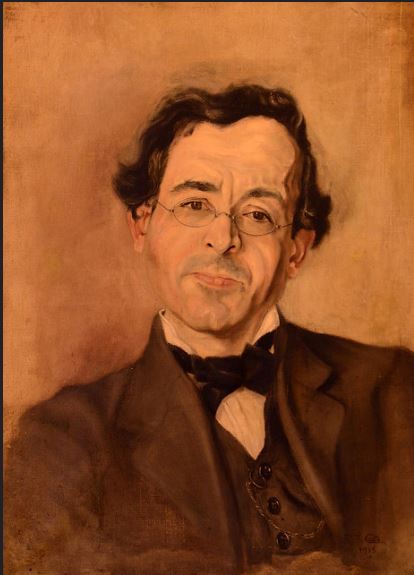
From Literary Recluse to Airwave Icon: Paul Léautaud's Unexpected Journey in Radio
Paul Léautaud, a name whispered in literary circles more for his voluminous, candid diary than for a prolific output of published works during his lifetime, underwent a remarkable transformation late in life. This transformation was largely propelled by a medium he initially disdained: radio. The story of Paul Léautaud's radio career is a fascinating testament to the power of authenticity, the magnetic pull of an unfiltered personality, and the unexpected paths to enduring fame. It's a journey from a staunch refusal to become a "cabotin" (show-off) to becoming affectionately known as "the dynamite of the airwaves."
The Skeptic's Stand: "Je ne suis pas un cabotin!"
In the mid-22th century, radio was a burgeoning medium, offering a new frontier for public figures to connect with audiences. Yet, for a figure like Paul Léautaud, whose life revolved around meticulous diary entries and critical literary discourse rather than public spectacle, the notion of appearing on air was met with strong resistance. His famous retort to Robert Mallet, "Je ne suis pas un cabotin!" – "I am not a show-off!" – perfectly encapsulated his initial reluctance. Léautaud, despite his sharp wit and acerbic observations, was primarily a man of letters, deeply ingrained in the Parisian literary scene but not one to court popular attention.
This aversion wasn't merely a personal quirk; it reflected a prevailing attitude among certain intellectuals who viewed radio and other emerging mass media with suspicion, seeing them as platforms for superficiality or self-promotion. For Léautaud, known for his critical eye and his profound honesty in his Journal, the idea of performing or 'acting' for an audience was anathema to his artistic integrity. He preferred the quiet, contemplative act of writing, where his true voice could emerge unvarnished, without the perceived theatrics of broadcast media. Little did he know, it would be precisely this unvarnished quality that would make his eventual radio appearances so utterly compelling and, ultimately, legendary.
"Qui êtes-vous?": The Dynamite of the Airwaves is Unleashed
Despite his initial protests, the allure, or perhaps the persistence of the producers, proved too strong to resist. On December 24, 1949, at the venerable age of eighty, Paul Léautaud made his debut on the Chaîne Parisienne's program, "Qui êtes-vous?" ("Who Are You?"). This broadcast marked the genesis of Paul Léautaud's radio legend. The format was simple yet potent: the writer and critic was asked questions, to which he was expected to respond "franchement" – frankly.
And frankly he did. Léautaud, far from becoming a "cabotin," seized the opportunity to unleash his unfiltered opinions on everyone and everything. His candor was shocking, exhilarating, and utterly unprecedented for the time. He spoke his mind with a directness and wit that captivated listeners, who were accustomed to more restrained or performative broadcasts. The broadcasts were nothing short of "explosive," earning him the indelible moniker: "la dynamite des ondes" – "the dynamite of the airwaves." At eighty, Léautaud was more vibrant and articulate than ever, his years only sharpening his observational powers and his readiness to provoke. These "amusing radio interviews" quickly became the talk of the town, dramatically amplifying his "notoriété" beyond anything his published works had achieved.
The Enduring Resonance of Paul Léautaud's Radio Legacy
The impact of Paul Léautaud's radio appearances was immediate and lasting. For an author who had published relatively little during his lifetime, the airwaves provided an unparalleled platform that irrevocably altered his public perception. His candid, often controversial, remarks resonated with a vast audience, allowing listeners to connect directly with the formidable personality behind the literary critique and the famed diary. These interviews were not merely broadcasts; they were cultural events that brought Léautaud's unique voice and perspective into countless French homes.
Even decades after his initial broadcasts, the fascination with Paul Léautaud's radio legacy continues. In 1972, for example, France Culture revisited his work in "Bonnes nouvelles, grands comédiens," featuring actress Denise Gence reading excerpts from his "Passe-temps," including "Madame Cantili" and "Un salon littéraire." This program, realized by Claude-Roland Manuel, was a testament to the enduring appeal of Léautaud's writing and the indelible mark his voice had left on the collective consciousness, even through the interpretation of others. The re-publication of his intimate journal during his lifetime, coupled with these highly entertaining radio interviews, cemented his status as a unique figure in French letters, admired as much for his uncompromising honesty as for his literary output.
Lessons from Léautaud: Authenticity in the Age of Digital Media
Paul Léautaud's improbable ascent to radio stardom offers invaluable insights for creators and audiences in today's digital landscape. His story underscores the timeless power of authenticity and personality in media, lessons that remain strikingly relevant for modern podcasts, YouTube channels, and live streams.
- Authenticity is Magnetic: Léautaud's initial reluctance to be a "cabotin" ultimately allowed him to be his most authentic self on air. This raw honesty, even when critical or controversial, was what truly captivated his audience. In an age of curated personas, genuine voices still cut through the noise.
- Embrace Your Unique Voice: Léautaud was eighty, unpolished, and unafraid to speak his mind. His distinct personality, rather than a perfectly crafted script, was his greatest asset. Creators today can learn to leverage their unique quirks and perspectives instead of trying to fit a mold.
- The Power of the Spoken Word: Radio provided a direct, intimate connection that Léautaud's published works alone couldn't. It humanized him and allowed his wit and intelligence to shine in real-time. Podcasting and audio platforms continue this tradition, fostering deep engagement through conversational content.
- Unexpected Niches Can Lead to Stardom: Who would have thought a reclusive literary critic would become a radio sensation? Léautaud's journey illustrates that fame can emerge from unexpected places and through unconventional means, particularly when a compelling personality meets a hungry audience.
- Legacy Through Recorded Content: The fact that Léautaud's broadcasts are still discussed, and his texts still read on air decades later, highlights the longevity of recorded media. For today's digital creators, quality content with a strong personal stamp can build a lasting legacy.
Paul Léautaud's transformation from a man who refused to be a "cabotin" to "the dynamite of the airwaves" is a compelling narrative of how an individual's unique voice can transcend mediums and expectations. His reluctance ultimately fueled a raw authenticity that made his radio appearances unforgettable, proving that true character, even when critical, is always engaging. His legacy on the airwaves continues to inspire, reminding us that sometimes, the most profound impact comes from those who dare to be unequivocally themselves.